
Loro
Reviews

Stephen Campbell
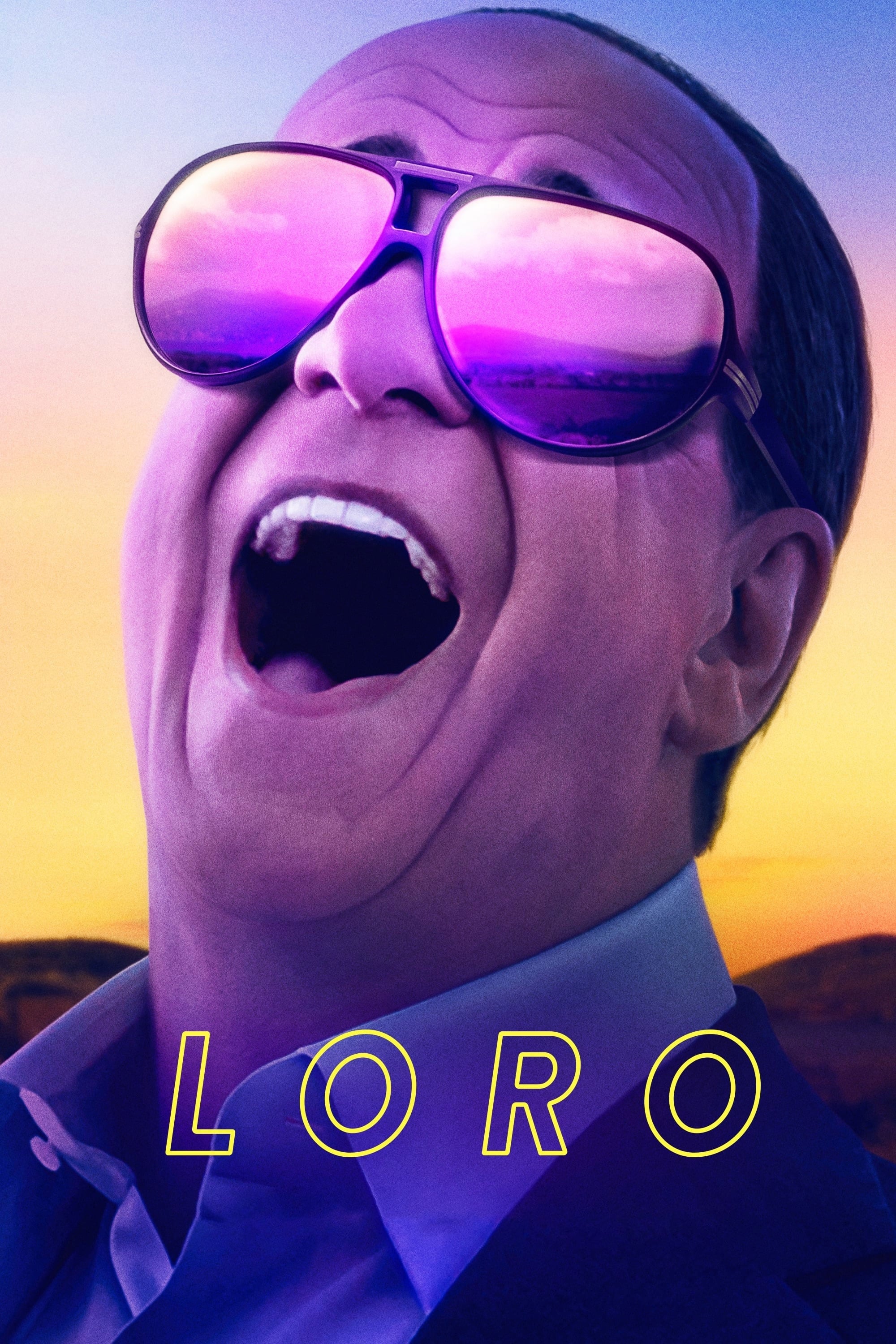
**_Very, very Sorrentino_** > _I am the Jesus Christ of politics. I am a patient victim, I sacrifice myself for everyone._ - Silvio Berlusconi; Campaign dinner (February 11, 2006) > _I am without doubt the person who's been the most persecuted in the entire history of the world and the history of man._ - Silvio Berlusconi; Press conference (October 8, 2009) > _When asked if they would like to have sex with me, 30% of women said, 'Yes', while the other 70% replied, 'What, again'?_ - Silvio Berlusconi; Press conference (March 30, 2011) > _They can tap my telephone calls. I d__on't give a fuck. I'm getting out to mind my own fucking business, from somewhere else, and so I'm leaving this shitty country, of which I'm sickened._ - Silvio Berlusconi; Tapped phone conversation with Valter Lavitola (July 13, 2011) > _Silvio Berlusconi first came to power for the same reasons Trump and other populists have been coming to power around the world: Voters were disgusted by a governing elite that seemed corrupt and out of touch. They felt swamped by waves of immigrants, frustrated by economic stagnation and disgusted by the cultural values of the cosmopolitan urbanites._ > _In office, Berlusconi did nothing to address Italy's core problems, but he did degrade public discourse with his speech, weaken the structures of government with his corruption and offend basic decency with his bunga bunga sex parties and his general priapic lewdness._ > _In short, Berlusconi, like Trump, did nothing to address the sources of public anger, but he did erase any restraints on the way it could be expressed._ - David Brooks; "The Chaos After Trump" (_New York Times_) (March 5, 2018) _Loro_ [_Them_], the latest film from Italian _auteur_ Paolo Sorrentino, is what can only be described as very, very Sorrentino, insofar as it's a pure distillation of his overriding thematic concerns and an inclusive anthology-like compendium of his stylistic tendencies. By way of comparison, think of _Terrence Malick_'s _To the Wonder_ (2012), _Knight of Cups_ (2015), and _Song to Song_ (2017), in which he all-but-abandons plot and character arcs in deference to emotional beats, esoteric voiceover, and metaphysical tone; think of David Lynch's _Mulholland Drive_ (2001), _Inland Empire_ (2006) and _Twin Peaks: The Return_ (2017), his most sustained expressions of cinematic surrealism and fractured identity since _Eraserhead_ (1977); or, in a very different sense, think of Michael Mann's _Miami Vice_ (2006), with its jargon-heavy dialogue and thematic focus on obsessive (male) professionalism, coupled with Mann's continued experimentation with digital photography and expressive _mise en scène_. One thing these films all have in common is that they unapologetically establish very early on they are playing by their own rules, and if you don't buy in pretty quickly, you won't buy in at all. So too _Loro_; this is Sorrentino at his most Sorrentino-like. Very much a thematic companion piece to _Il divo_ (2008), his examination of seven-time Italian Prime Minister Giulio Andreotti, whilst stylistically similar to the Oscar-winning masterpiece _La grande bellezza_ (2013), _Loro_ is more interested in extravagant hedonism and Dionysian excess than the former and more bitingly satirical than the latter. Visually stunning, with a towering central performance from Toni Servillo (working with Sorrentino for the sixth time), some will criticise the film as all style, no substance; some will decry the lack of a strong forward-moving plot; some will take issue with the fact that Sorrentino seems reluctant to condemn Berlusconi outright; some will argue that in attempting to satirise the commodification of the female body, Sorrentino simply reproduces such commodification, as well as legitimising the concomitant male gaze; some will find it too glossy and unrealistic; some will find it vulgar; some will find it sordid; some will regard the aping of Fellini as too on the nose. And there's validity in each position, to one degree or another. In other words, it's very, very Sorrentino! Written with his regular writing partner Umberto Contarello, _Loro_ tells the "partly fictionalised" story of Silvio Berlusconi (Servillo) from just after the April 2006 general election (which saw _L'Unione_, the centre-left coalition led by Romano Prodi, narrowly defeat _Casa delle Libertà_, the centre-right coalition led by Berlusconi) and concluding with the April 2009 L'Aquila earthquake and Berlusconi's return to power. As the film begins, we're introduced to Sergio Morra (Riccardo Scamarcio), a pimp from Taranto. Hoping to ingratiate himself with Berlusconi, Morra heads to Sardinia, and rents a villa bordering Berlusconi's summer residence. Populating it with his escorts, who he encourages to party as much and as publicly as possible, he sits back and waits, knowing Berlusconi won't be able to stay away from so many scantily clad women for long. However, unbeknownst to Morra, Berlusconi's attention is elsewhere. Finding himself in a political position to which he is unaccustomed (leader of the opposition), he is at something of a loss as to how to fill his day. On a more personal level, his marriage to Veronica Lario (Elena Sofia Ricci) is breaking down, despite his best efforts to salvage the relationship. Meanwhile, his old friend, Ennio Doris (also Servillo), points out that due to how tight the 2006 election was (_L'Unione_ took the _Camera dei deputati_ by a margin of .1%), if Berlusconi could persuade six sitting senators to switch to the opposition, Prodi's government would collapse. Meanwhile, Veronica heads to Cambodia, leaving Berlusconi unsupervised at home, and by now he's very aware of who is living next door. A controversial film in Italy from the moment of its announcement, Sorrentino was unable to secure funding from his usual financier, Medusa Film, which is co-owned by Berlusconi. Released in Italy in two parts, _Loro 1_ (104 minutes) and _Loro 2_ (100 minutes), the film was released internationally as one piece, running 145 minutes. More formally inventive than any of Sorrentino's previous work, the visual structure of _Loro_ is not entirely dissimilar to that employed by Adam McKay in _The Big Short_ (2015) and _Vice_ (2018), with the cast even breaking into a full musical number at one point. And, as will come as a shock to precisely no one, _Loro_ looks absolutely amazing. There's the gorgeous and vibrant cinematography by Sorrentino regular Luca Bigazzi, rendering Sardinia as a lazy, sun-kissed nirvana bathed in the verdant green of the foliage and the rich blue of the ocean and sky, with the colours in general so vibrant as to make Luca Guadagnino's _Call Me by Your Name_ (2017) seem practically black and white in comparison. The richness of the film's visual aesthetic is helped immeasurably by the luxurious and gaudy production design by Stefania Cella (_What Just Happened?_; _Downsizing_; _White Boy Rick_), the decadent and seductive wardrobe by Carlo Poggioli (_Cold Mountain_; _Van Helsing_; _Divergent_), and the makeup by Maurizio Silvi (_Moulin Rouge!_; _Hannibal Rising_; _Zoolander 2_), hilariously recreating Berlusconi's waxen surgery-enhanced features and permatan, effectively turning Servillo into a human Ken doll. Indeed, the film is almost _too_ beautiful. Sorrentino employs such lush, over-the-top beauty because he is satirising soulless elegance (and soulless tack); that which is aesthetically pleasing but metaphysically empty. By all-but drowning the audience in extraordinary, but ultimately meaningless, opulence, could he be accused of recreating and thus partially validating that which he is mocking? Yes, he could, although the counter-argument would be that he's too smart a filmmaker and too consummate an artist to 'accidentally' stumble into legitimising that which he is attempting to satirise. Take, for example, how he employs female nudity, of which there is a huge amount, almost all void of much in the way of narrative justification. On the surface, it's gratuitous nudity-for-nudity's sake. However, the lack of any meaningful rationale for showing such nudity is precisely the point; to show that the characters dispassionately view women as commodities. Every male in the film, and even some of the females (for example, Morra's business partner Tamara (Euridice Axen) and Kira (Kasia Smutniak), an acquaintance of Berlusconi's with whom Morra becomes infatuated) look at the escorts as objects whose bodies are for nothing beyond satisfying the lust of lascivious men and generating profit for their pimps. The sight of so many beautiful young women degrading themselves for lecherous old men leaves a nasty aftertaste, precisely as is intended. The film opens with a bizarre scene depicting a lamb wandering into Berlusconi's villa. After a moment, the air conditioning turns on, and the lamb literally freezes. It's an absurdist scene right out of Franz Kafka, Luis Buñuel, or Roy Andersson, and it immediately sets the tone for the film, alerting the audience that this is not going to be a typical warts-and-all biopic; instead, it's going to be surreal and strange, slightly out of sync with the real world. Is Sorrentino saying that the only way one can parse a man such as Berlusconi is by placing him in a reality not quite our own, by fictionalising him and rendering him absurd? Perhaps. However, the film closes by intercutting the L'Aquila earthquake with his return to power; Italy is literally shaking to its core as he regains his authority, and there's little absurdity about this sequence. One of the most interesting facets of the film is how relatively lenient Sorrentino is – Berlusconi is not exactly sympathetic, but neither is he what you would call a villain. In this sense, the film reminded me of Oliver Stone's _W._ (2008), in which Stone takes an unexpectedly even-handed approach in his depiction of the presidency of George W. Bush. Part of the reason Berlusconi comes across as not completely reprehensible is because of Toni Servillo. A performer of immense talent, Servillo is too intelligent and nuanced to allow any part lapse into caricature, and so, even when Berlusconi is at his most irredeemable, Servillo never allows us to forget there is a soul in there somewhere, however well-hidden it may be. A good example is a scene showing us Berlusconi at his most licentious, as he attempts to seduce Stella (Alice Pagani), a quiet and somewhat withdrawn young escort. As Servillo plays it, the scene is more pathetic than anything else; a sad old man unable to see how shameful his behaviour really is. Servillo's Berlusconi remains always a bully, but he's also a man horrified by the fact that he's growing old, and his refusal to go gently into that good night is mixed with the occasional bout of regret. Servillo also lets us see just how much it genuinely hurts Berlusconi when his marriage breaks down, as he is still desperately in love with Veronica, despite the fact that his behaviour has led her to despise him. As he realises her mind is not for changing, he is able to get her to admit that she still loves him. However, she also says that he is not the same man she married, telling him, "_you never reveal yourself. You are one uninterrupted performance._" Tellingly, he isn't quite sure how to respond to this, and it's a legitimately painful moment. In this sense, the film essentially challenges the audience not to hate the man, despite his many reprehensible actions and characteristics. On a more superficial level, Servillo perfectly captures Berlusconi's ridiculous grin, his obsession with opulence, his disdain for etiquette, and his ability to spin anything to make himself look good, irrespective of the facts clearly showing that he's lying (and yes, it's supposed to remind us of a certain pathological liar currently living at 1600 Pennsylvania Avenue NW). And although the film does feature Noemi Letizia (Pasqualina Sanna), it ends prior to the commencement of the alleged "bunga bunga" parties (supposedly mass orgies involving up to 20 women, who would perform African sexual rituals with Berlusconi). The first of these was not until February 2010, so there's also no Ruby Rubacuori, and the film addresses little that would later be cited in Berlusconi's 2013 trial for soliciting an underage prostitute. Thematically, a major issue is acquisition; of capital, of property, of power, of influence, of anything. The driving force of so many of the characters (especially people like Morra, Tamara, and Kira) is simply "more". These are people who can literally never be satisfied. Indeed, on three separate occasions, a character says, "_Having it all isn't enough_". Another theme is the normalisation of decadence, a theme conveyed primarily by how Sorrentino shoots certain scenes. For example, we see cocaine being consumed so often that by the time we get to the last half-hour or so, we don't even register it anymore. This isn't the case of a filmmaker accidentally overexposing a trope. Rather, overexposure _is_ the trope; something like this should never be normalised, yet in this environment it most certainly is. Speaking of decadence, the first half of the film is so full of sensationalist hedonism as to make the _milieu_ of _La grande bellezza_ look Puritan by comparison. Cocaine being snorted off escorts' bodies is a recurring motif, and naked or near-naked women are in the background so often you don't even see them after a while. In one brilliantly staged scene, as Morra and his escorts are walking through Rome, a garbage truck crashes and explodes, throwing its contents into the air before it rains down on the escorts. However, just as the garbage reaches them, the film cuts to a pool party in Morra's Sardinian villa, and instead of garbage falling from the sky, the escorts are instead in the middle of a shower of ecstasy tablets. Make of that metaphor what you will. The _milieu_ is almost entirely devoid of morality; drugs are universal; sex is transactional; politicians are corrupt, petty, and venal egotists; innocence is something no one even remembers. Berlusconi's own attitude to holding public office is brilliantly dramatised in arguably the film's best scene. After deciding to return to politics, he tests himself to see whether he still has "it." Bearing in mind that he made his fortune and reputation successfully selling real estate in a hostile buyers' market, he randomly cold-calls a gloomy housewife and proceeds to sell her a luxury apartment that he readily admits hasn't even been built yet. It's a Servillo acting masterclass, and it's very funny, but it's also very telling - rather than brushing up on policy, or trying to clean his act up, this is how he prepares himself to attempt to topple the sitting government. However, for all its strengths, _Loro_ is nowhere near the quality of Sorrentino's recent English-language output - _This Must Be The Place_ (2011), the horrifically underrated _Youth_ (2015), and the glorious _The Young Pope_ (2016), whilst it pales in comparison to its closest stylistic precursor, _La grande bellezza_ (for my money one of the top twenty films of the century, thus far). Sure, everything that makes a film a "Sorrentino film" is present and accounted for (as I said in the introduction, this is perhaps the most quintessential Sorrentino film yet) - there's the visual opulence, the hedonistic _milieu_, the undercurrent of corruption and greed, the casual sexuality. However, unlike, say, _La grande bellezza_ or _The Young Pope_, in _Loro_, the visual panache can often come across as an end unto itself, rather than serving the story and/or themes. The biggest problem, however, is that structurally, the international cut is unable to escape the bifurcated narrative design of the original. Very much a film of two halves, the first half focuses on Morra and a group of politicians and hangers-on (the eponymous "loro"), as they position themselves within Berlusconi's orbit, and the second focuses more tightly on Berlusconi himself (who doesn't actually appear on screen for almost an hour), especially his relationship with Veronica, and his attempts to once again become prime minister, with the film rarely leaving his Sardinian estate. And as you can probably imagine, the transition is not entirely smooth, especially insofar as entire subplots are abandoned without explication or resolution, and seemingly important characters fade into the background and often disappear (Morra himself features in only a couple of scenes in the second half), which does have the effect of making the whole thing feel a little scattershot at times. That said, however, this is still Sorrentino, so no matter the problems, there's always going to be much to admire. He's a master _auteur_ who always has something fascinating to say, and here turning his attention to perhaps Italy's most notorious post-War politician, he gets plenty of inspired mileage out of the tawdry subject matter. Very much a chronicler of the darkness behind Italy's sparkle, Sorrentino suggests that Berlusconi, and men like him, are driven by vanity and a desire for power as its own reward. Yes, the storyline is a little slack, and, yes, it somewhat unexpectedly finds humanity in the man, and yes, it's Sorrentino's weakest film for a while. But it's also a Sorrentino film. And for that, if nothing else, it's worth a look.
Movie Recommendation
 Gravity and Me: The Force That Shapes Our Lives2017-03-09Professor Jim Al-Khalili investigates the amazing science of gravity. As well sculpting our universe, gravity also affects our weight, height and even the rate at which we age.More...
 The Seven Ages of Elvis2017-08-16Documentary about the life and career of Elvis Presley produced for Sky Arts. Includes rarely seen clips and photos from throughout Elvis' career as well as comments from music historians and musicians, songwriters, producers, actors, etc. who worked with him. Narrated by producer/director David Upshal.More...
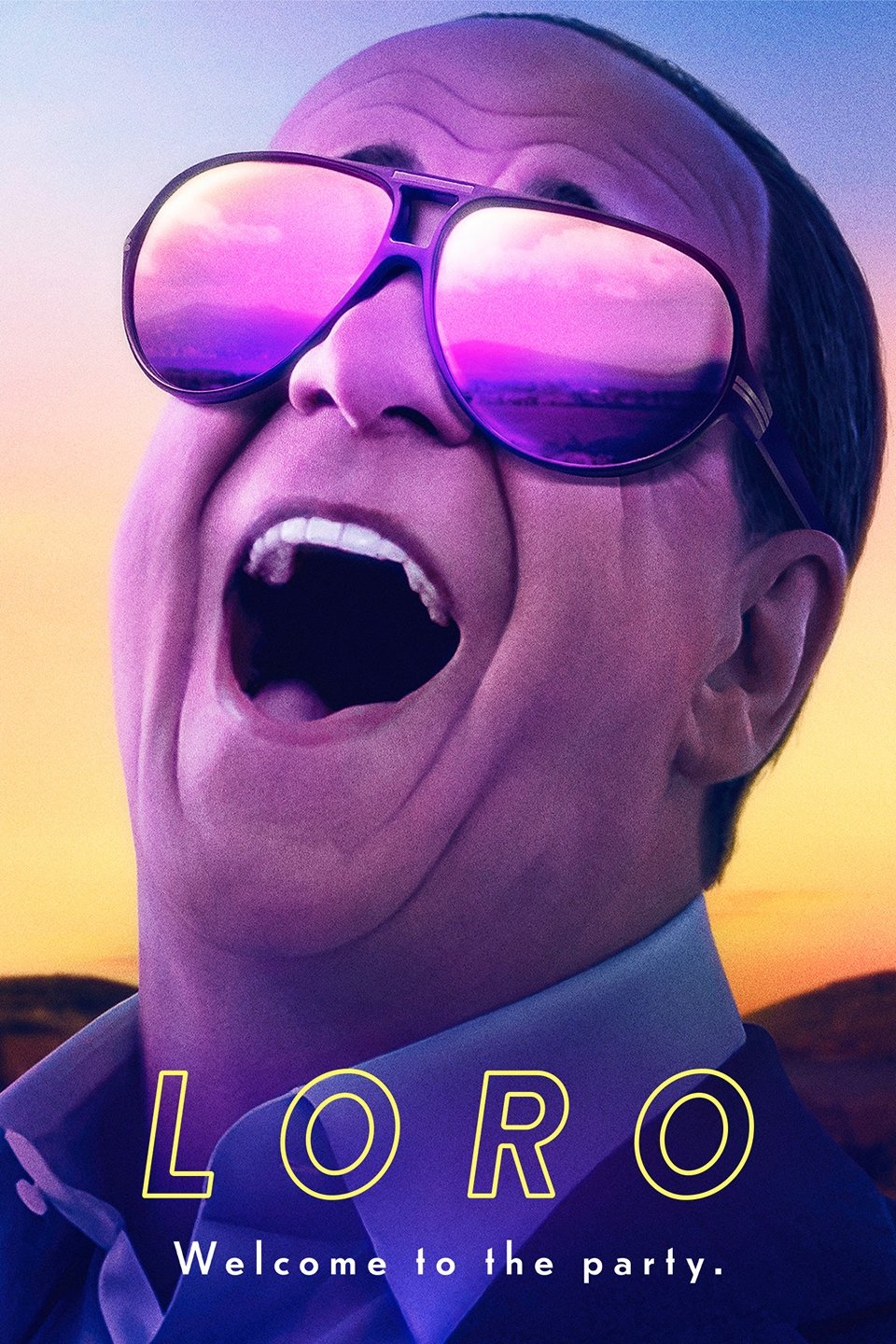 Loro 12018-04-24"Loro", in two parts, is a period movie that chronicles, as a fiction story, events likely happened in Italy (or even made up) between 2006 and 2010. "Loro" wants to suggest in portraits and glimps, through a composite constellation of characters, a moment in history, now definitively ended, which can be described in a very summary picture of the events as amoral, decadent but extraordinarily alive. Additionally, "Loro" wishes to tell the story of some Italians, fresh and ancient people at the same time: souls from a modern imaginary Purgatory who, moved by heterogeneous intents like ambition, admiration, affection, curiosity, personal interests, establish to try and orbit around the walking Paradise that is the man named Silvio Berlusconi.More...
 Heart of Glass1976-11-12A small Bavarian village is renowned for its "Ruby Glass" glass blowing works. When the foreman of the works dies suddenly without revealing the secret of the Ruby Glass, the town slides into a deep depression, and the owner of the glassworks becomes obssessed with the lost secret.More...
 In the Land of Blood and Honey2011-12-22During the Bosnian War, Danijel, a soldier fighting for the Serbs, re-encounters Ajla, a Bosnian who's now a captive in his camp he oversees. Their once promising connection has become ambiguous as their motives have changed.More...
 We Steal Secrets: The Story of WikiLeaks2013-05-24Julian Assange. Bradley Manning. Collateral murder. Cablegate. WikiLeaks. These people and terms have exploded into public consciousness by fundamentally changing the way democratic societies deal with privacy, secrecy, and the right to information, perhaps for generations to come. We Steal Secrets: The Story of WikiLeaks is an extensive examination of all things related to WikiLeaks and the larger global debate over access to information.More...
 Let Me Introduce You to Sofia2018-10-31Gabriele is a divorced dad who owns a music store and is completely focused on taking care of his 10-year-old daughter Sofia who spends time with both parents. One day he bumps into his old friend Mara who - for the first time since his separation - reignites his desire to be in a relationship. There is only one problem, Mara hates children!More...
 The Embalmer2002-09-06Peppino, a diminutive taxidermist with a reputation for sleaziness, meets Valerio, a handsome if artless much younger man fascinated by the trade. Peppino offers him a large salary to be his assistant—the job burgeoning into a budding friendship he mistakes for something more. When Valerio gets a girlfriend, their fledgling romance will be threatened by an insanely jealous third wheel.More...
 Tucker: The Man and His Dream1988-08-12Ypsilanti, Michigan, 1945. Engineer Preston Tucker dreams of designing the car of future, but his innovative envision will be repeatedly sabotaged by his own unrealistic expectations and the Detroit automobile industry tycoons.More...
 Mr. Devil2019-08-22In 1950s Italy, a government official arrives in a rural town to investigate a grisly child murder. The culprit is a young boy who claims he acted in order to kill the Devil itself.More...
 Skin Trade2014-11-07After his family is killed by a Serbian gangster with international interests. NYC detective Nick goes to S.E. Asia and teams up with a Thai detective to get revenge and destroy the syndicates human trafficking network.More...
 Torno indietro e cambio vita2015-06-18Marco is married to a gorgeous woman, has a child and a great job. Everything seems perfect, at least until his wife of 25 years announces that she has another man and wants a separation. Marco is forced to leave home.More...
 A Man in a Hurry2018-11-07The story revolves around Alain, a busy businessman who is always in a rush. In his life, there is no room for spare time or family. But one day, he suffers a stroke, which makes him lose his grasp of language and use one word in place of another.More...
 King of Killers2023-09-01Garan is a part of a group of international hitmen who are contracted to take out the most dangerous killer in the world, only to find out that they're the ones being hunted.More...
 The Taming of the Scoundrel1980-12-20A rich farmer is well known for being very unkind. He's misanthropic, misogynous and cantankerous. Until he meets by chance a gorgeous girl...More...
 Loro 22018-05-10"Loro", in two parts, is a period movie that chronicles, as a fiction story, events likely happened in Italy (or even made up) between 2006 and 2010. "Loro" wants to suggest in portraits and glimps, through a composite constellation of characters, a moment in history, now definitively ended, which can be described in a very summary picture of the events as amoral, decadent but extraordinarily alive. Additionally, "Loro" wishes to tell the story of some Italians, fresh and ancient people at the same time: souls from a modern imaginary Purgatory who, moved by heterogeneous intents like ambition, admiration, affection, curiosity, personal interests, establish to try and orbit around the walking Paradise that is the man named Silvio Berlusconi.More...
 Once Upon a Time in Venice2017-06-08Steve Ford is a private detective in Venice Beach, Calif., who's good with the ladies, bad with the punches and wild about his dog Buddy. When local thugs steal Buddy, Ford turns to Spyder, their devious leader, and forges an unlikely alliance. With help from his best friend, Steve pulls out the big guns to retrieve Spyder's stolen cash and cocaine and save Buddy.More...
 Talcum Powder1982-01-22Sergio Benvenuti is a shy seller of contracts for a Roman company of music, but because of his character he cannot find even a customer, so he asks for help from a fellow named Nadia.More...
 Showtime2002-03-14A spoof of buddy cop movies where two very different cops are forced to team up on a new reality based T.V. cop show.More...
 Hammamet2020-01-09The last years of Bettino Craxi, one of the most important and controversial italian leader of the 1980's.More...