
Network
Reviews

tmdb39513728
**The Primal Forces of Network** According to the Writers Guild of America the greatest screenplay of all time belongs to _Casablanca_. A sentimental favourite, no doubt, worthy for a handful of catchy one-liners capped off with a convincing dump-the-dame speech. While Bogie plays himself, Bergman, who may have been the most beautiful woman of all time, didn't have much to say. The best moments in Casablanca were, in fact, the silent ones, and without Bogie and Bergie's chemistry, it probably wouldn't have made the top 10. Best screenplay suggests best story, best plot, best characters and dialogue; best combination of drama, comedy, intrigue, emotional engagement, suspense, social and political relevance; one peppered with casual everydayisms, baited with humour and simmering with intelligence, threatening to release an experiential payload of euphoric proportions; a work that can transcend genre and demographics, build up simultaneously on various levels, plumbed by the weight of it's essential voice, sending out intuitive signals, rippling with perplexing channels and insightful glimpses that are symbolically blended into plain words on paper; all with a properly superb balance of sex, wit, desire, comfort, fear, anger and wisdom in an accelerated narrative leading us to a magnificent crescendo and--fade out--leaving us to wonder. Furthermore, great screenplays serve the motion-picture medium's incomparable ability to effortlessly jump time and space. _Casablanca_ is static and contained, framed and nailed to the wall: a pretty photograph. Despite the WGA's endorsement, there can only be one candidate good enough to qualify for the all-time best screenplay, and fittingly it goes to the all-time best screenplay writer. Paddy Chayefsy's _Network_ has dazzled us for four decades and counting. The scene where a mob of murderous bank-robbing terrorists who have their own reality TV show bicker over the wording of their contract alone demonstrates we are dealing with a higher grade of pertinent genius. The corporate cosmology of Arthur Jensen, a pivotal lesson in global economics, tops it off, leaving all Network's competitors in the dust, burying any climactic speech written before or since, Bogie's famous brush-off farewell included, thus slamming the lid down on anything _Casablanca_ can play. As for ill-fated romances, the doomed alliance between old-school journalism (Holden) seduced and corrupted into severing his ties with his compassionate spouse to hastily shack up with the opportunistic post-modern media wench (Dunaway) is fraught with more complications than anything _Casablanca_ can muster, and it's only one of the sub-plots. Of course _Network_ is most famous for the "I'm mad as hell" rant, which swells from a nuanced and complex story arc demonstrating the rise and fall of an iconic media star. Hell-raising public mischief aside, Howard Beale's profound narrative leads off with a suicidally desperate, washed-up newsman who impulsively hits a nerve, rockets to stardom as a modern-day prophet, then is shaped and sensationalized as an overcooked parody by the media, stigmatized by maniacal Fox-news-like delusions that overtake him until he gets too big for his britches and needs a walloping corporate scolding, causing his starry streak to fizzle out, before getting gunned down by the greedy TV execs who made him, leaving hapless undiscriminating audiences to grasp for the next new thing. _Network_ is inspired writing that doesn't require heart-throbbing movie stars to pull it off. It could have been directed by my illiterate grandmother, shot on VHS in a dingy church basement, performed by eager boy scouts and girl guides, and it would still be the greatest screenplay of all time, one not just for the spectacle of projecting on a giant screen, but for doubling as a giant mirror with just enough sugar-coated satire to swallow the shitty truth about ourselves. Though calling _Network _a satire is like calling Hamlet a murder mystery. Satire is either spineless and passive-aggressive, or specific and short-lived. Chayefsky's bombastic pronouncements become more exceptional and relevant each passing year.
The Movie Diorama
Network broadcasts its televisional corruption through satirical poetry that beckons democratic madness. “I’m as mad as hell, and I’m not going to take it anymore”, screams Howard Beale from the confinement of his studio desk. Exerting his ornate insanity upon the entranced viewers who innocently stare at their cubic televisions, watching the news broadcast fuelled by media misrepresentation and propaganda. “Go to your nearest window and scream”, acting as the voice of the working class, benign to the American corporate fundamentals that masquerade the politics of democracy. In an age where leading actors can represent constituencies or states, and businessmen can be presidential candidates for a nation (and successfully winning...), Lumet’s timeless satire on conceptualised democracy is one that grows more appropriate with each passing decade. A statement on the American financial system, where colossal stock markets rule the supposed freedom of the people. Broadcasting networks more focussed on combating against each other for monetary viewership, leading to exaggerated fabrications, rather than reporting the truth, the whole truth and nothing but the truth. Exploiting the frail mentality of humanity to feed the greed and lust of “humanoid” managers, capitalising on the naivety of man. Network depicts the modern evolution of communicating false truths. As technology evolves, we grow more and more susceptible to the “truth” that is conveyed to us. We, much like sponges, absorb the information demonstrated through the porous pixels that we subject our eyes to. Televisions. And through hyperbolised satire, including planning an assassination attempt and coercing suicidal tendencies, Lumet offers a cutthroat insight into broadcasting institutions and the meticulous methods in which networks function. Motivated by stock shares and rating dominance. Pioneering the consumption of propagandist material. Lumet exploits the audacious power of televisions and its communicative abilities, turning an often comedic satire into a transcendental horror feature. Powered by sterling performances all-round, including the elusively commanding Dunaway, the maddening lunacy of Finch and the smoothly suave Holden, the poetic dialogue immediately captures the attention of its audience. Concisely elaborate with a hint of existential analysis, an ornate lexicon that refrains viewers from tuning out. Lumet’s long sumptuous takes, allowing the performances to ironically hypnotise, further extend the reach of its material. Superlative direction that, whilst suddenly throws you into the immediate chaos of Beale’s mentality, eases the hectic pace with its scathing power. The offscreen affair between Dunaway and Holden was the only underdeveloped sub-plot, reinforcing her workaholic agenda that likened her to a corporate machine than to a human with emotive capabilities. Aside from that, Network absolutely deserves its near-perfect acclaim. A considerably profound illustration of the American system that tantalisingly exposes the fraudulence of promised conceptualised democracy, whilst also enforcing the relinquishment of humanity through television sets. Harrowing times we live in...
Ahmetaslan27
The UPS network is a television network that suffers from a lack of viewership. This led to the layoff of a group of their employees, including the great media night news presenter, Howard Beale, and this led to the events of a psychological impact on Beale, so he promised that he would commit suicide in front of the camera the next day. The conditions and conditions of the network changed after Beale's decision to commit suicide in front of the camera the next day. The film takes us through the changes that occur to the network after this incident. How did Howard get the situation to the brink, how does the network deal with the crisis, and how do they benefit from the incident, or in a more correct, how do they exploit it to increase the number of views and return the network to the most powerful television network in America. The film focuses on 4 characters, the first character is Diana Christensen, a character who doesn't care about high principles in the media and tries in various ways to do anything, even if it is bad, in order to make the network gain more views, a character that surprises you a lot because of her orientations. The second character is Howard Beale and the internal factors that led him to stand in front of the camera, fragile and mind-bending. Is it personal or is the network related? The third character, who are the members of the network and the fate of the company, what are the things they will do in order to save the network from collapse and raise viewing rates and ratings, even if at the expense of harming others, literally anything? The last character is the viewers. How do they want to attract viewers to the network as long as possible to ensure higher profits and the viewer to stay for as long as possible? This requires many things that you will see in the movie. What I liked about the film is that the film was able to mock companies, criticize societies, and focus on the weakness of people through its story and not through direct messages. The highest number of views. What we see now in the media in the 21st century, we see that this is true, although the film says that it is based on fictional events. How do the minds of the media founders play with the minds of the viewers through the television screens that reach every home? It was formulated well. Are people only looking for entertainment, even if it is at the expense of harming others? All these ideas and questions are employed in a coherent story and seen through its complex characters.
CinemaSerf
Peter Finch is superb here as the increasingly puritanical television news anchor ("Beale") who, having been told he was about to be fired decided on air to tell the audience he was going to shoot himself on live telly. Next night - yep, he was allowed back - he declared that it was time the viewing public got off their sofas and declared they had "had enough" with lazy government and corporate greed. His long suffering boss "Max" (William Holden) wants to have him looked after (medically) but the ambitious PR executive "Diana" (Faye Dunaway) sees an opportunity amidst all this evangelicalism and convinces the station's new boss "Hackett" (Robert Duvall) to remove "Max" and to reinstate "Beale" with his own hour long news hour programme complete with it's own soothsayer! Initially, this all sounds too barmy to be real, but in true television tradition - it catches on. The audiences soar, the advertisers and sponsors love it. For once, the news division isn't haemorrhaging cash! Can this be sustained though? "Beale" is entirely out of control and nobody - even his own network - is safe from his ranting and raving. Sooner or later he is bound to overstep the mark - and then the dominoes are going to topple spectacularly. To be honest I found the story to become more and more preposterous as the potent points about avarice, venality and success at all costs became subsumed into a denouement scenario that was pretty ridiculous. That said, this isn't really about the story so much as the performances from Finch, Holden, and the frequently scene-stealing Dunaway who delivers some pithy monologues with the sharpness of hound's tooth! Even now, almost fifty years later, it still resonates as conversations about true journalism versus commercial pandering showing no sign of ever abating, let alone finding a solution that adequately satisfies both. It also swipes quite nicely at the audience - the anything for a peaceable life brigade who get their news from television so long as they like what they hear! I would have like to have seen more of Finch, but as it is, this is a cracking and characterful look at what makes some of us tick (or not!).
Brent Marchant
Few Hollywood productions have been as utterly prescient as director Sidney Lumet’s cinematic masterpiece “Network” (1976), a chillingly serious satire about the television business in the 1970s and where it was ultimately headed in years to come. Written by TV pioneer Paddy Chayefsky, this winner of four Oscars on 10 total nominations provides a comical but cynically disturbing look inside the workings of a fictitious American television network. In telling this story, the film eerily forecast the direction this medium would take in the decades that followed with remarkable accuracy, stunningly predicting such developments as the tabloidization of TV, the consolidation of media ownership, the impact of foreign influence and investment, and the dumbing down, sensationalism and line-blurring of its content in both its entertainment and journalistic programming. It also nailed developments outside the television business with great clarity by focusing on the pivotal role that TV played (and would come to play) in those occurrences. And, even though it’s something of a nostalgic time capsule of the period in which it was filmed, the picture has held up remarkably well (it gets better with every viewing for me), even unwittingly providing viewers with an ironic and unsettling metaphor for the ubiquitous rise of social media (with TV serving as a stunningly fitting stand-in). Chayefsky’s Academy Award-winning script is positively brilliant, epitomizing what good screenwriting can (and should) be. And its casting is about as good as it gets, earning Oscars for the performances of Faye Dunaway, Peter Finch and Beatrice Straight, along with well-deserved nominations for William Holden and Ned Beatty and noteworthy accolades for Robert Duvall and Marlene Warfield. In fact, I’m stunned that this offering lost out to “Rocky” for best picture and that nominee Lumet was passed over for the best director award. Those oversights aside, however, I was nevertheless privileged to view this offering at a retrospective screening in honor of the filmmaker’s 100th birthday to a nearly sold-out audience. I’m pleased to see that this celluloid gem still garners so much viewer attention nearly 50 years after its release and that it’s attracting the interest of moviegoers of all ages. This is an absolute must-see for avid cinephiles, as well as highly recommended viewing for anyone who truly wants a poignant, insightful look at what’s truly going on in the world around them, particularly when it comes to the workings of said world and the selective filtering of information about it. “Network” just might deservedly open a few eyes – and raise quite a few eyebrows at the same time.
Movie Recommendation
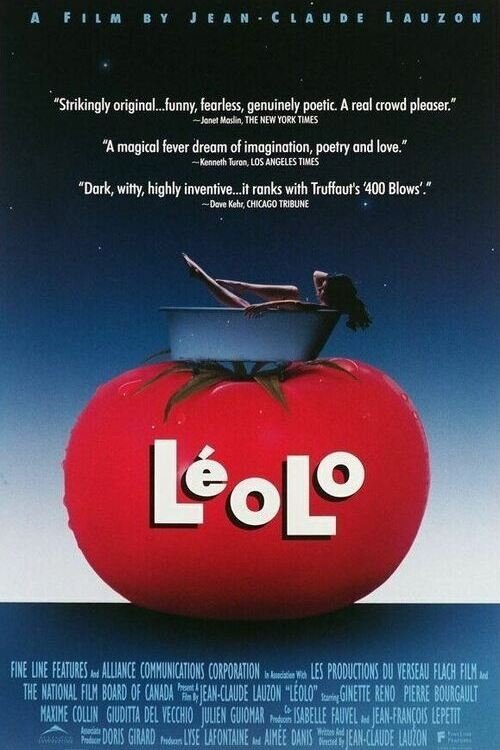 Léolo1992-09-16The story of an imaginative boy who pretends he is the child of a sperm-laden Sicilian tomato upon which his mother accidentally fell.More...
 Koyaanisqatsi1983-04-27Takes us to locations all around the US and shows us the heavy toll that modern technology is having on humans and the earth. The visual tone poem contains neither dialogue nor a vocalized narration: its tone is set by the juxtaposition of images and the exceptional music by Philip Glass.More...
 The Manchurian Candidate1962-10-24Near the end of the Korean War, a platoon of U.S. soldiers is captured by communists and brainwashed. Following the war, the platoon is returned home, and Sergeant Raymond Shaw is lauded as a hero by the rest of his platoon. However, the platoon commander, Captain Bennett Marco, finds himself plagued by strange nightmares and soon races to uncover a terrible plot.More...
 The Nun's Story1959-06-18After leaving a wealthy Belgian family to become a nun, Sister Luke struggles with her devotion to her vows during crisis, disappointment, and World War II.More...
 Zama2017-09-28In a remote South American colony in the late 18th century, officer Zama of the Spanish crown waits in vain for a transfer to a more prestigious location. He suffers small humiliations and petty politicking as he increasingly succumbs to lust and paranoia.More...
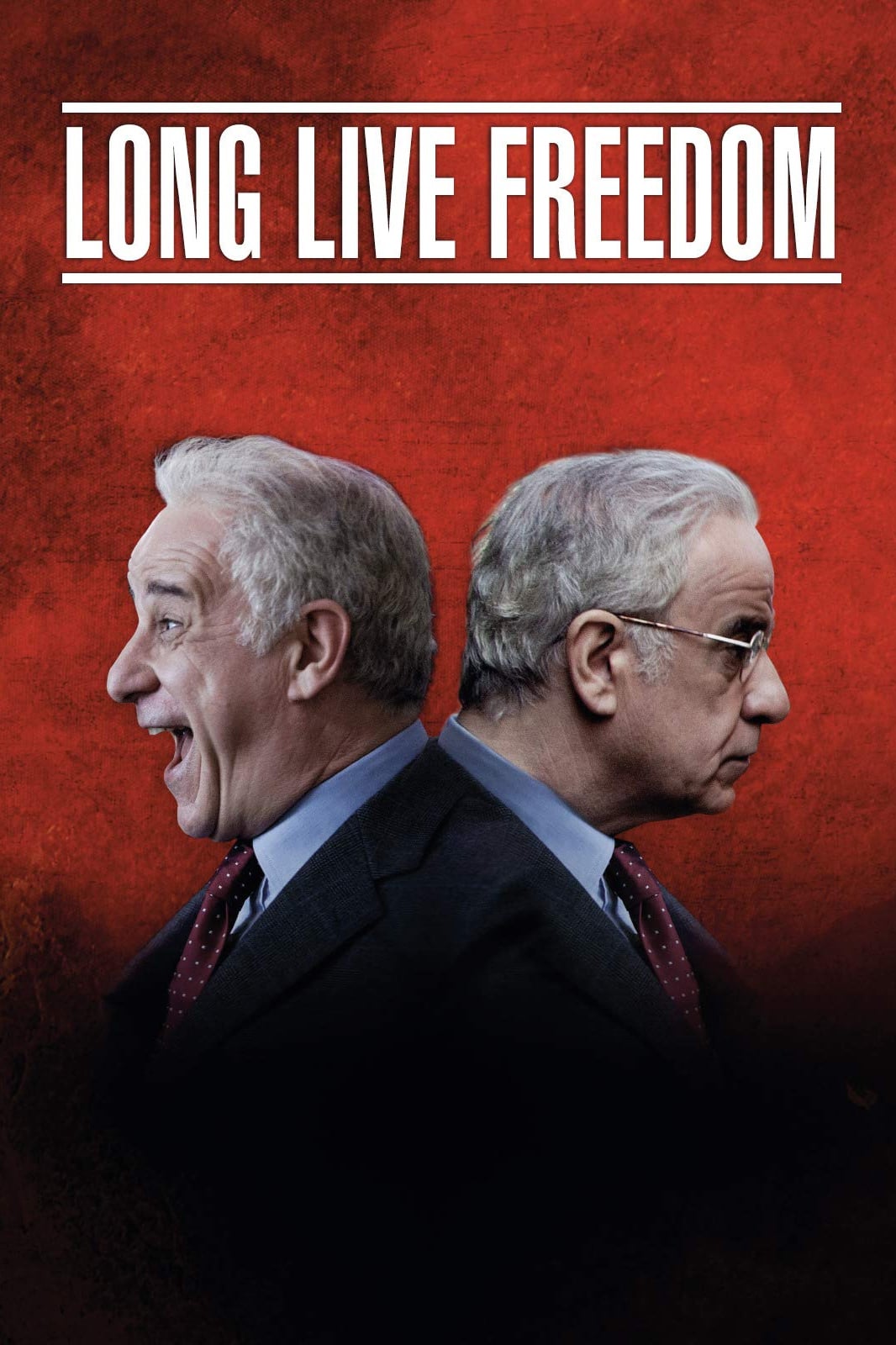 Long Live Freedom2013-02-13Elections are approaching and things don't look too good for the opposition. Their leader can't stand the pressure and disappears. To avoid a scandal, the upper echelons of the party concoct a risky plan: to replace him with his identical twin, a philosopher with BPD, whose eclectic ideas and direct approach unexpectedly make the party surge in the polls.More...
 The Teacher2016-07-21The principal of an elementary school calls a special parents meeting after it’s alleged that the seemingly empathetic and kindly-looking teacher Mrs. Drazděchová uses her students to manipulate their parents.More...
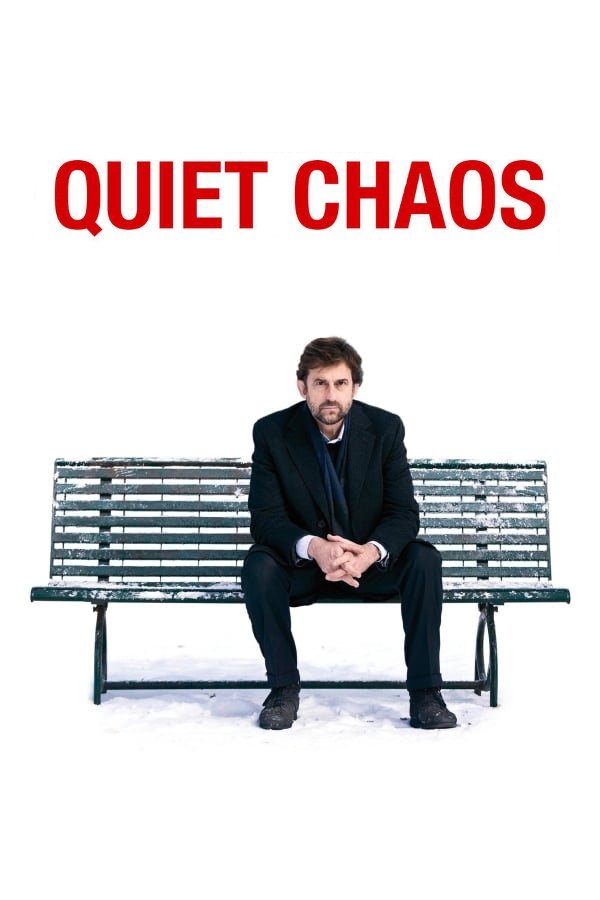 Quiet Chaos2008-02-08Pietro is a successful businessman with a wife and a daughter. One day he helps his brother save two women from drowning at the beach. When he returns home he finds that his wife has died. Now Pietro has to take care of his daughter, Claudia. When he drives her to school soon after, he decides to wait for her all day in front of the school, and soon that's what he does every day.More...
 Sunday Bloody Sunday1971-07-01Recently divorced career woman Alex Greville begins a romantic relationship with glamorous mod artist Bob Elkin, fully aware that he's also intimately involved with middle-aged doctor Daniel Hirsh. For both Alex and Daniel, the younger man represents a break with their repressive pasts, and though both know that Bob is seeing both of them, neither is willing to let go of the youth and vitality he brings to their otherwise stable lives.More...
 Two for the Road1967-04-27Architect Mark Wallace and his wife, Joanna, travel to France to meet with an affluent client. While there, they reflect on their first decade of marriage -- memories of when they first met, of courtship, and of road trips through the French countryside. As flirtation and playful quarreling turn to boredom with the banality of married life, the Wallaces struggle to rekindle their passion, while mutual infidelity threatens to tear them apart.More...
 Shriek If You Know What I Did Last Friday the Thirteenth2000-10-17In this horror parody, a masked serial killer menaces the town of Bulimia Falls with various sharp objects. Attention-seeking television personality Hagitha Utslay is soon on the scene, reporting on the ever-growing body count. Former mall security guard Doughy shows up to protect the teenage population, but he's clearly not much help, allowing the murderer to pick off even more hapless kids as numerous scary movies are referenced.More...
 Looking for Mr. Goodbar1977-10-19A short, unhappy affair with a married man leads a dedicated schoolteacher into the alcohol-and-drug fueled underworld of singles’ bars, where she begins to engage in a pattern of dangerous sexual activity.More...
 Caesar Must Die2012-03-02Inmates at a prison in Rome rehearse for a performance of Shakespeare's Julius Caesar.More...
 The Interview1998-03-03A duel between a suspected murderer and a detective pressed by people who want results. But whose skin is really wanted?More...
 Nayakan1987-10-21Velu Naicker, who witnesses the brutal murder of his father, kills a corrupt policeman and escapes to Mumbai, only to become a gangster.More...
 Night Falls on Manhattan1997-03-21A newly elected District attorney finds himself in the middle of a police corruption investigation that may involve his father and his partner.More...
 Johnny Handsome1989-09-12A career criminal who has been deformed since birth is given a new face by a kindly doctor and paroled from prison. It appears that he has gone straight, but he is really planning his revenge on the man who killed his mentor and sent him to prison.More...
 Equus1977-10-16A psychiatrist, Martin Dysart, investigates the savage blinding of six horses with a metal spike in a stable in Hampshire, England. The atrocity was committed by an unassuming seventeen-year-old stable boy named Alan Strang, the only son of an opinionated but inwardly-timid father and a genteel, religious mother. As Dysart exposes the truths behind the boy's demons, he finds himself face-to-face with his own.More...
 The Whiskey Bandit2017-11-23Between 1993 and 1999, one man robbed 29 financial institutions in Budapest. Banks, post offices and even travel agencies fell victim to his crime spree. The police had no leads and no hope of finding him during his six-year stint. The only clue left behind at the crime scenes was the distinct aroma of whiskey. The media christened him the “Whiskey Bandit”. Never physically harming anyone, many began to eagerly follow his escapades through the media. A Transylvanian immigrant, who also happened to be a goalie for one of the city's largest hockey teams, named Attila Ambrus, was finally identified as the “Whiskey Bandit”. The police had finally captured him... or so they thought.More...
 The Public Woman1984-06-16An inexperienced young actress is invited to play a role in a film based on Dostoyevsky's 'The Possessed'. The film director, a Czech immigrant in Paris, takes over her life, and in a short time she is unable to draw the line between acting and reality. She winds up playing a real-life role posing as the dead wife of another Czech immigrant, who is manipulated by the filmmaker into commiting a political assassination.More...
Similar Movies
Battleship Potemkin
 1925-12-24A dramatized account of a great Russian naval mutiny and a resultant public demonstration, showing support, which brought on a police massacre.
Belle de Jour
 1967-05-24Beautiful young housewife Séverine Serizy cannot reconcile her masochistic fantasies with her everyday life alongside dutiful husband Pierre. When her lovestruck friend Henri mentions a secretive high-class brothel run by Madame Anais, Séverine begins to work there during the day under the name Belle de Jour. But when one of her clients grows possessive, she must try to go back to her normal life.
The Tin Drum
 1979-05-02In 1924, Oskar Matzerath is born in the Free City of Danzig. At age three, he falls down a flight of stairs and stops growing. In 1939, World War II breaks out.
Oldboy
 2003-11-21With no clue how he came to be imprisoned, drugged and tortured for 15 years, a desperate man seeks revenge on his captors.
The Bridges of Madiso...
 1995-06-02Photographer Robert Kincaid wanders into the life of housewife Francesca Johnson for four days in the 1960s.
Manhattan
 1979-04-25Manhattan explores how the life of a middle-aged television writer dating a teenage girl is further complicated when he falls in love with his best friend's mistress.
Annie Hall
 1977-04-19New York comedian Alvy Singer falls in love with the ditsy Annie Hall.
Effi Briest
 1974-06-20When 17-year-old Effi Briest marries the elderly Baron von Instetten, she moves to a small, isolated Baltic town and a house that she fears is haunted. Starved for companionship, Effi begins a friendship with Major Crampas, a charismatic womanizer.
The Piano
 1993-05-18When an arranged marriage brings Ada and her spirited daughter to the wilderness of nineteenth-century New Zealand, she finds herself locked in a battle of wills with both her controlling husband and a rugged frontiersman to whom she develops a forbidden attraction.
Faces
 1968-11-24Middle-aged suburban husband Richard abruptly tells his wife, Maria, that he wants a divorce. As Richard takes up with a younger woman, Maria enjoys a night on the town with her friends and meets a younger man. As the couple and those around them confront a seemingly futile search for what they've lost -- love, excitement, passion -- this classic American independent film explores themes of aging and alienation.
GoodFellas
 1990-09-12The true story of Henry Hill, a half-Irish, half-Sicilian Brooklyn kid who is adopted by neighbourhood gangsters at an early age and climbs the ranks of a Mafia family under the guidance of Jimmy Conway.
3 years after
 1948-10-03Soya's satirist take on variations of Danes, who willingly or unwillingly came to deal with German troops during the five year Second World War occupation.
Secrets of a Soul
 2012-01-01Secrets of a Soul: Margarethe, Creator of bizarre sculptures! Night club dancer? Mad woman? Victim of an occult conspiracy?! Dark menaces steal her soul and organs. Though dead they keep her alive...
Transamerica
 2005-02-14A transgender woman takes an unexpected journey when she learns that she had a son, now a teenage runaway hustling on the streets of New York.
The Horse Whisperer
 1998-02-01The mother of a severely traumatized daughter enlists the aid of a unique horse trainer to help the girl's equally injured horse.
Basquiat
 1996-08-09The brief life of Jean Michel Basquiat, a world renowned New York street artist struggling with fame, drugs and his identity.
Secret Beyond the Doo...
 1947-12-24After a whirlwind romance in Mexico, a beautiful heiress marries a man she barely knows with hardly a second thought. She finds his New York home full of his strange relations, and macabre rooms that are replicas of famous murder sites. One locked room contains the secret to her husband's obsession, and the truth about what happened to his first wife.
To Die For
 1995-09-22Suzanne Stone wants to be a world-famous news anchor and she is willing to do anything to get what she wants. What she lacks in intelligence, she makes up for in cold determination and diabolical wiles. As she pursues her goal with relentless focus, she is forced to destroy anything and anyone that may stand in her way, regardless of the ultimate cost or means necessary.
The Lives of Others
 2006-03-23In 1984 East Berlin, dedicated Stasi officer Gerd Wiesler begins spying on a famous playwright and his actress-lover Christa-Maria. Wiesler becomes unexpectedly sympathetic to the couple, and faces conflicting loyalties when his superior takes a liking to Christa-Maria.
The Terminal
 2004-06-17An Eastern European tourist unexpectedly finds himself stranded in JFK airport, and must take up temporary residence there.